
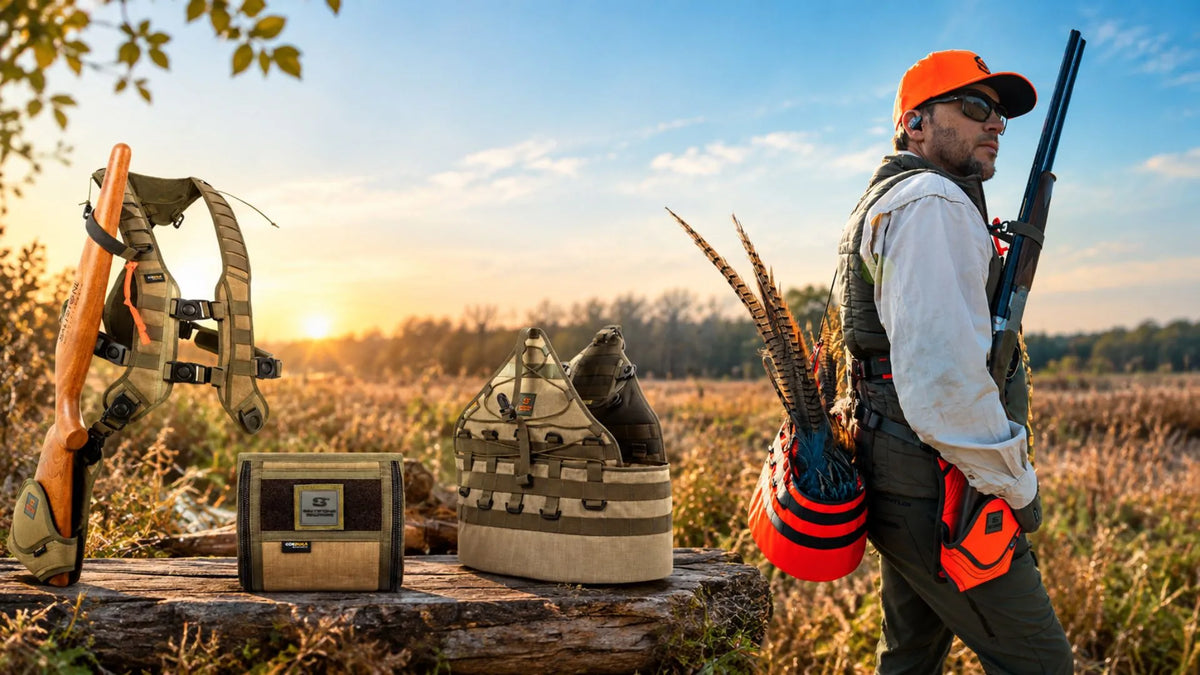
Navigating the autumn prairies and thick briar patches in pursuit of ring-necked pheasants requires hours of trekking across rugged, unforgiving terrain. Whether you are walking through tall grass, pushing through dense brush, or tracking your bird dog across miles of open cover, your setup dictates your success. Out in the field, a substandard pheasant hunting vest can lead to shoulder strain, overheating, lost ammunition, or a uncomfortable trek back to the truck.
Selecting high-performance pheasant hunting gear means choosing equipment that balances durability, functional storage, load distribution, and field safety. An ideal bird hunting vest must do far more than store extra shotgun shells—it serves as your mobile command center for carrying fresh game, hydration, radio gear, and essential tracking equipment.
Below is an in-depth breakdown of what every hunter should look for in a modern pheasant hunting vest with game pouch, along with crucial features that ensure comfort and performance on long days in the field.
Key Features to Demand in a Modern Pheasant Hunting Vest
1. Load Distribution and Ergonomic Support
A traditional strap or full-cloth vest transfers the weight of your gear and harvested birds directly to your shoulders and neck. By mid-afternoon, this causes upper body fatigue and slows down your mount when a rooster flushes.
Look for an adjustable strap or harness-style vest with a padded hip belt. Proper weight distribution transfers the bulk of the load to your hips, leaving your shoulders free for fluid, unrestricted gun mounting.
2. Blood-Proof, Accessible Game Pouch
The defining feature of any true upland vest is its game bag. Look for a pheasant hunting vest with game pouch capacity that easily accommodates multiple large roosters without squeezing or crushing your harvest.
Key design elements to verify:
-
Blood-proof interior lining: Prevents moisture and blood from soaking through onto your base layers.
-
Expandable, easy-load access: Side or front loading capability lets you drop birds into the pouch effortlessly without taking the vest off.
-
Easy cleaning: Internal linings should wipe down cleanly after a long day in the field.
3. Rapid Ammunition Access and Shell Storage
Fumbling for extra shells when birds are flushing in coveys can cost you precious seconds. High-efficiency shell pockets should include:
-
Quick-access flap closures or magnetic lids.
-
Internal elastic loops or dividers to prevent shells from rattling together.
-
Deep, structured bottoms that keep boxes or loose rounds secure while wading through thick brush.
If you prefer carrying a secondary weapon or want hands-free versatility while walking between covers, explore modular options like the Salt Stone Home Page. Modern modular systems allow you to attach customized ammo pouches, holsters, and gear attachments to match your specific hunt.
4. High-Visibility Blaze Orange for Safety
Safety is paramount during upland bird hunting, especially when driving fields with multiple hunting partners and dog handlers. Most states require a specific number of square inches of high-visibility safety clothing.
Opt for a vest featuring high-grade Blaze Orange panels across the back game pouch, chest, and shoulder straps. This ensures visibility to other hunters above tall corn, prairie grass, or dense scrub.
5. Modular Customization and Modular Attachment Systems
No two hunts are identical. Early October in South Dakota requires light clothing and heavy hydration, while late December in Iowa calls for bulky insulation and extra space for hand warmers.
Modular hunting systems allow you to scale your setup up or down based on season and weather conditions. For hunters who demand hands-free mobility alongside dedicated bird carrying capacity, the Bird Bundle Upland Hunting Vest Rifle Carry System offers an adaptable platform. It integrates heavy-load carry support, customizable modular storage pouches, and an innovative rapid-access carry system to lower physical fatigue during all-day trekking.
6. Rugged, Tear-Resistant Materials
Upland covers are full of thorny locusts, briars, barbed wire, and dense brush. Standard cotton or light nylon vests tear easily under these conditions. Look for vests engineered with high-denier Cordura®, reinforced ripstop polyester, or heavy-duty treated canvas. Reinforced double-stitched seams and weather-resistant coatings ensure your gear survives season after season in harsh wilderness environments.
Upland Vest Comparison Matrix
| Feature | Standard Traditional Vest | High-Performance Modular Upland Vest |
| Weight Distribution | Shoulders & Upper Back | Padded Hip Belt & Lumbar Support |
| Game Pouch | Basic Rear Pocket | Blood-Proof, Expandable, Multi-Access |
| Storage Capability | Fixed Pockets | Modular Add-ons (GPS, Ammo, Hydration) |
| Season Adaptability | Limited Layering Room | Fully Adjustable Strap/Harness System |
| Hands-Free Versatility | Standard | Rapid-Access Holster / Modular Clips |
Field Maintenance Tips for Your Upland Gear
To get the maximum lifespan out of your bird hunting vest:
-
Clean the Game Bag Immediately: Rinse out blood and field debris using cold water and mild detergent after every trip to prevent staining and odors.
-
Inspect Straps & Buckles: Check stress points, webbing, and quick-release buckles for wear or sand buildup prior to taking the field.
-
Air Dry Completely: Never store a damp hunting vest in a closed bag or warm truck bed. Hang it in a ventilated area to preserve fabric integrity and water-resistant coatings.
Frequently Asked Questions (FAQs)
What is the difference between a strap vest and a traditional upland vest?
A strap vest uses an open harness system worn over your choice of clothing, providing maximum breathability and weight distribution across the waist and shoulders. A traditional full-fabric vest covers more of your torso, which can trap excess heat during early-season walks.
How big should the game pouch on a pheasant hunting vest be?
A pheasant hunting vest with a game pouch should comfortably carry at least 2 to 3 rooster pheasants alongside essential field supplies without restricting your movement or pulling the vest backward.
Can I use my upland bird vest for other types of hunting?
Yes. Versatile upland vests work exceptionally well for grouse, quail, dove, and small game hunting. Modular setups like those available at Salt Stone can also be reconfigured for big game scouting, predator hunting, or wilderness trekking.
How do I size my upland hunting vest for winter layering?
Choose a vest with fully adjustable chest and lumbar straps. This allows you to fit the vest snugly over a lightweight t-shirt in early autumn or expand it to fit over heavy insulated coats during late-season winter hunts.
Upgrading Your Upland Setup
Investing in top-tier pheasant hunting gear transforms long field walks into effortless, enjoyable outings. By focusing on proper weight distribution, durable tear-resistant construction, easy-clean game storage, and modular flexibility, you ensure that your gear works with you rather than against you.
Ready to upgrade your bird gear for the upcoming hunting season? Explore the complete collection of modular hunting vests, attachments, and load-bearing accessories at the Salt Stone Official Store.
Saltstone
-
Contact Phone: +1 (561) 232-6195
-
Contact Email: customerservice@saltstone.shop